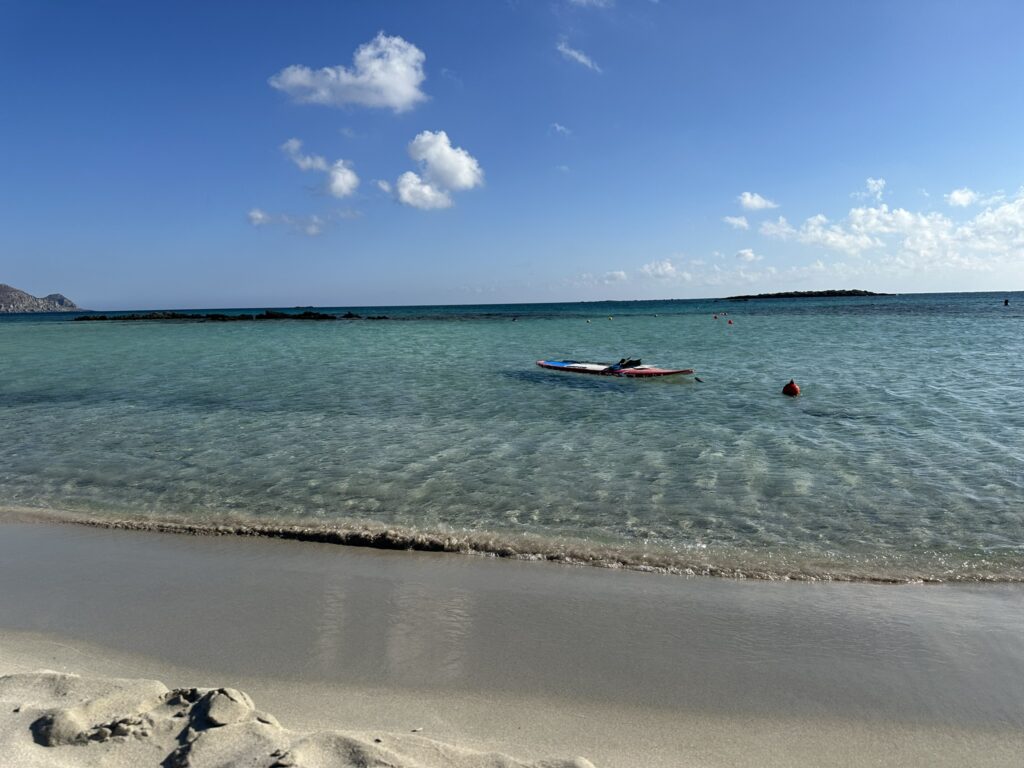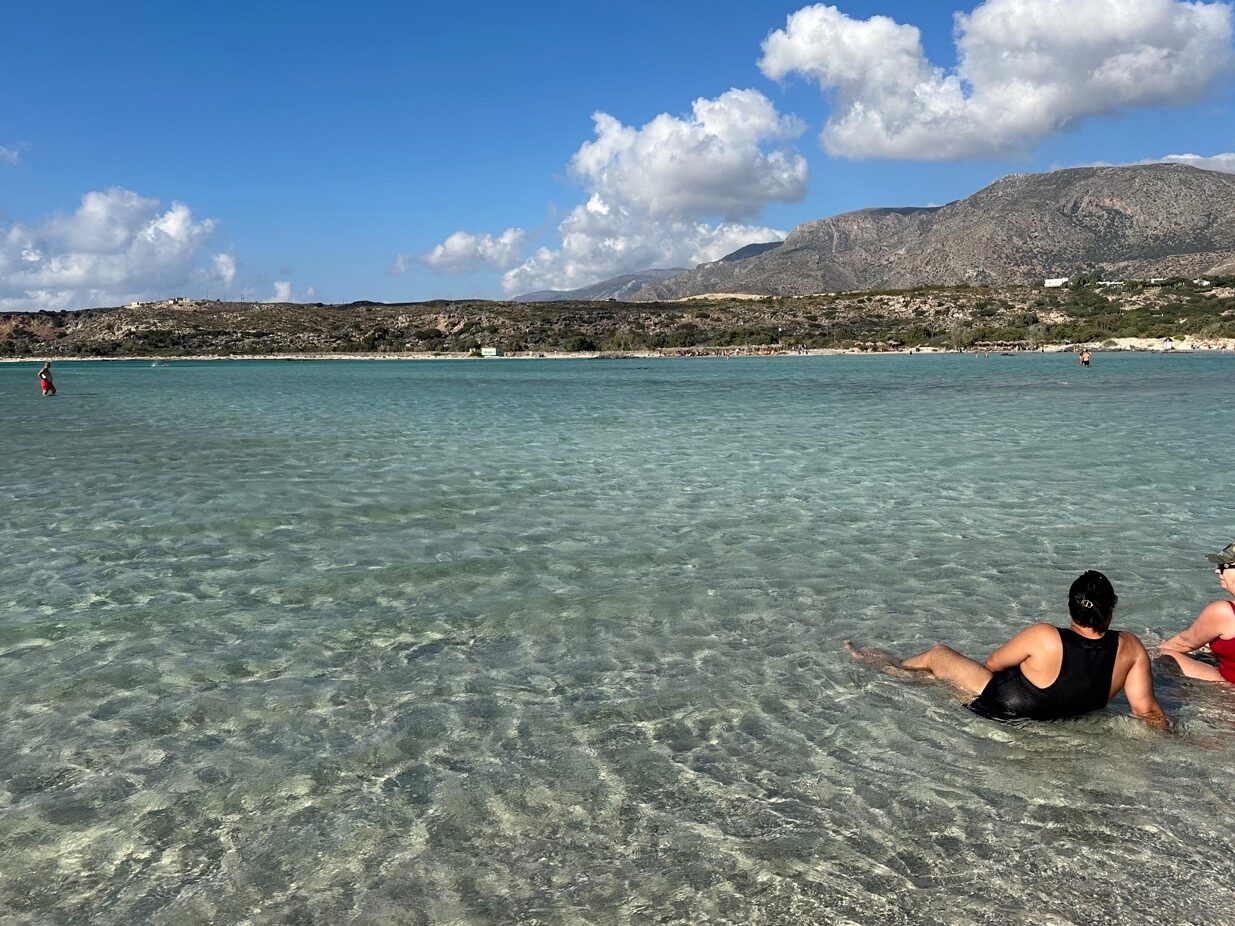
More than a beach day — it’s a journey through the spirit of western Crete.
When people see pictures of Elafonisi, they often imagine it’s just a beach. Pink sand, turquoise water — a postcard-perfect place. And yes — it is stunning. But the road to Elafonisi, and the area around it, hold so many more stories.
That’s why, on our trip, this is a full experience — not just a swim stop.
The drive from Chania to Elafonisi is part of the magic.
We head west, passing through the rolling hills of Kissamos. The landscape shifts: olive groves, vineyards, and old villages where life hasn’t changed much in decades.
The road winds through Topolia Gorge, where tall cliffs rise dramatically on both sides. One of the memorable moments on this drive is passing through the famous one-way tunnel carved by hand into the rock — a narrow, atmospheric passage that reminds you how resourceful Cretans are. We often pause briefly before entering, as traffic flows one direction at a time — it’s a small adventure in itself.
Along the way, there are tiny mountain chapels, roadside honey sellers, and breathtaking views down toward the Libyan Sea.
Before reaching the beach, we stop at Chrysoskalitsa Monastery — perched high on a rock above the sea. The name means “Golden Step” — and legend says that one of the 98 steps leading to the monastery turns to gold, but only for the truly faithful to see.
This monastery played an important role in local life, especially during periods of occupation and war. During the Ottoman period, it served as a refuge and safe place for the Cretan resistance. Today, it is peaceful, humble, and full of history.
From the terrace, you can see Elafonisi shimmering in the distance.
Elafonisi is not really one beach, but a small lagoon and protected natural area. The pinkish color of the sand comes from millions of crushed shells and coral mixed into the fine white sand.
You can wade across the shallow water to reach the small island opposite the main beach — a place of sand dunes, wildflowers (in spring), and untouched nature. Elafonisi is part of the Natura 2000 protected network, home to rare flora and migratory birds.
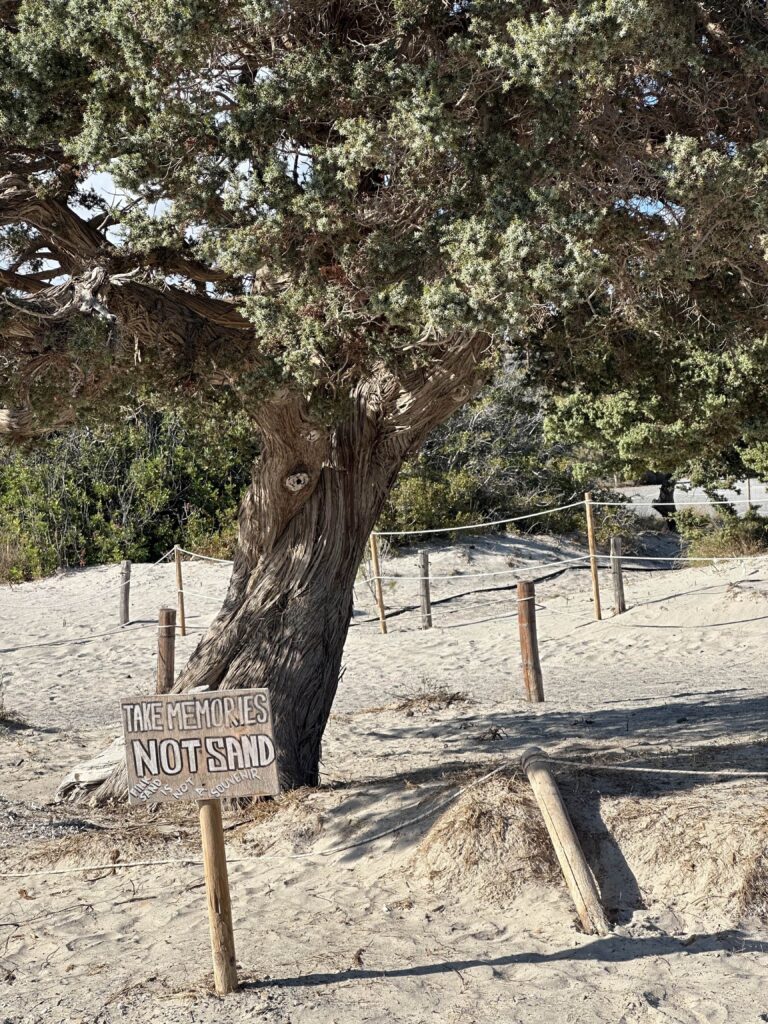
Elafonisi is also a place of memory. In 1824, during the Greek War of Independence, hundreds of women and children from nearby villages were killed here by Ottoman troops — many had hidden on the island, thinking the rising tide would protect them. Today, there is a small memorial near the dunes.
By visiting out of season, we get the best of Elafonisi:
Space to walk and explore
No morning race for sunbeds
Time for a relaxed swim and a long taverna lunch nearby
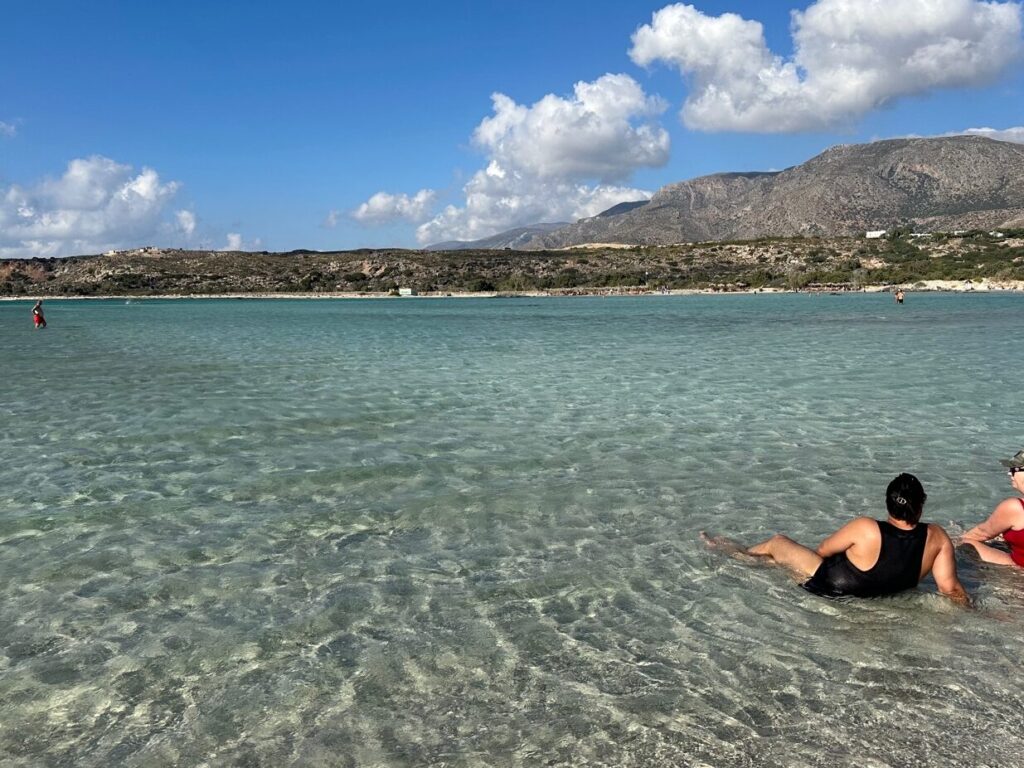
Facilities are simple here — and that’s part of the charm. In season, there’s usually a small cantina selling cold drinks and snacks. You’ll also find a few rows of sunbeds and umbrellas, but far fewer than at big commercial beaches — which means the wild, natural feel of Elafonisi remains.
Some guests choose to walk to the far side of the island, where it feels wild and peaceful. Others stay closer to the beach to swim, take photos, or simply enjoy the moment.
Elafonisi is a place of contrasts: beauty, memory, wild nature, and human story. The day we visit is not only about seeing a famous beach — it’s about understanding why this part of Crete matters.
From the winding mountain roads, to the handmade one-way tunnel, to Chrysoskalitsa’s legends, to the sands of Elafonisi, this is a day to experience the layers of Crete — its landscapes, its past, and its living beauty.