

The Man Behind It: Yiannis Boutaris
If you talk about modern Greek wine, you cannot skip this name. Coming from the historic Boutari family, Yiannis Boutaris chose not just to continue a legacy – but to redefine it. In 1997, he created Kir-Yianni with a clear vision:- focus on Greek varieties
- precision in viticulture
- and a more thoughtful, modern expression of terroir
A Personal Connection
There is also another Kyr-Yianni estate in my hometown, Florina, in the Amyndeon region. When I visited it for the first time, I was genuinely impressed – not just by the wines, but by the philosophy, the structure, the way everything was thought through. And that is exactly what made me want to come here too – to see where everything started and how it all connects.Why Naousa Is So Special
Naousa is not just another wine region. It is actually a PDO (Protected Designation of Origin) area dedicated almost entirely to one grape: Xinomavro What makes this place unique comes from its geography:- Vineyards sit between 150-400 meters altitude
- On the slopes of Mount Vermio
- With a mix of limestone, clay, and sandy soils
Xinomavro: Not an Easy Wine – But a Great One
This is not a soft, easy-drinking grape. Xinomavro is:- high in acidity
- high in tannins
- often lighter in color than you expect
- complex, sometimes even “angular” when young
Different Styles – One Identity
What I found interesting (and you start to understand this more when you visit wineries like Kyr-Yianni) is that Naousa is not just one style. There are different approaches:- Traditional style
Lighter color, more earthy, more structured, long aging potential - More extracted style
Deeper, more intense, but still very tannic - Modern approach
Softer, more approachable, sometimes with small blends (like Merlot) to round the edges
A Winery Built on Detail
What makes Kyr-Yianni stand out is not just the wine – it’s the precision behind it.- The vineyards are divided into multiple parcels (over 30)
- Each parcel is studied and cultivated differently
- Clones, soil, exposure – everything is taken into account
A Winery Full of Stories
Beyond the technical side, this place has character.- The “Paragka” – a simple old house that became part of the winery identity
- The blue tractor – the first piece of equipment, still there today
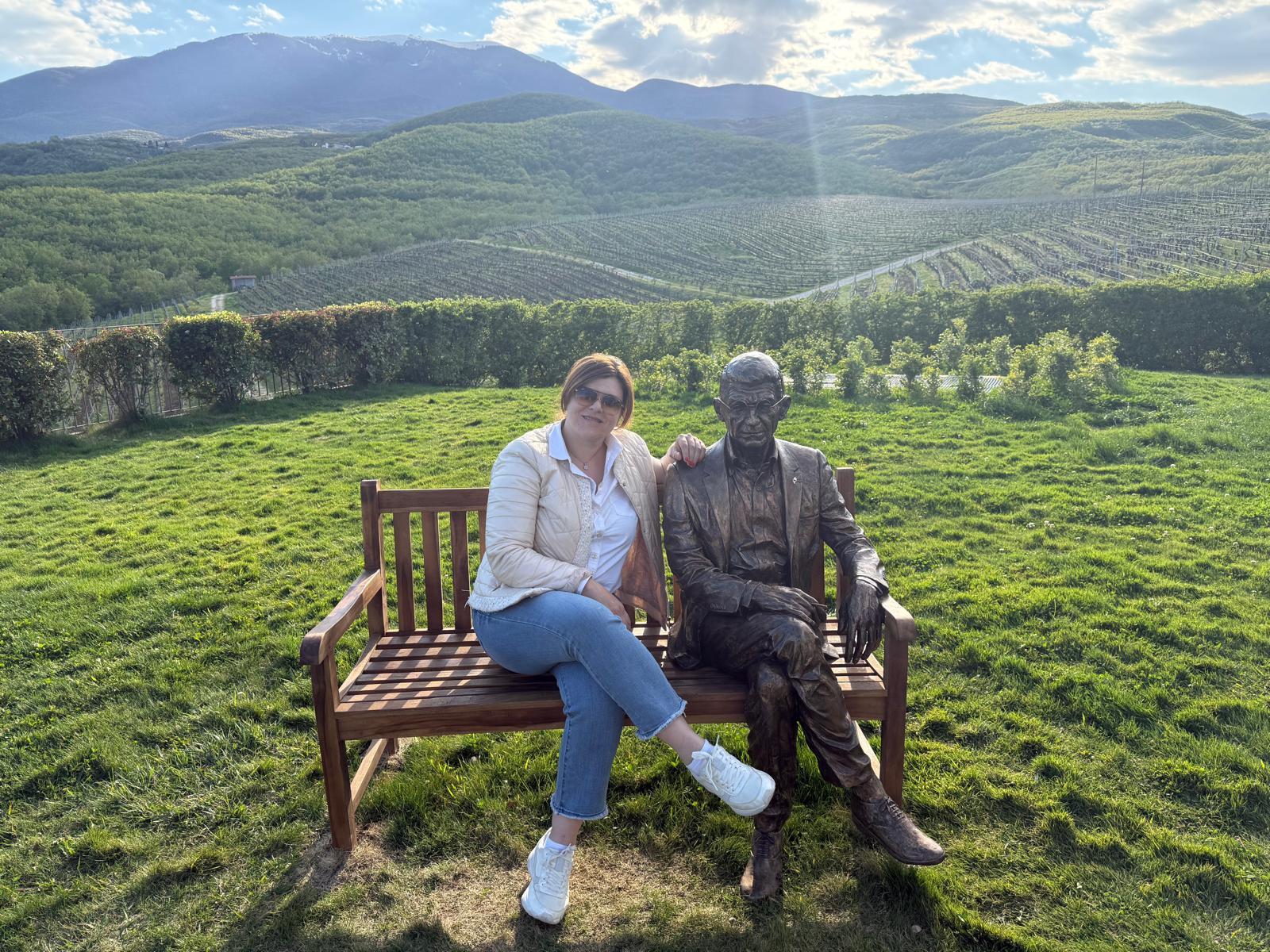
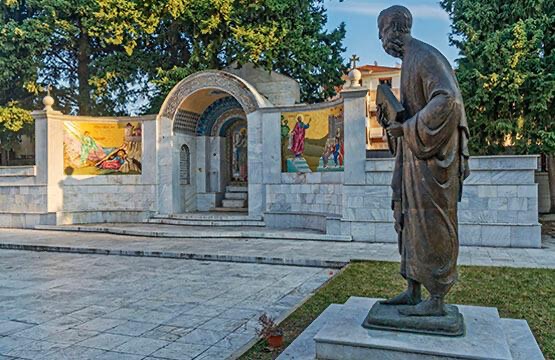
- And the statue of Yiannis Boutaris
with the vineyards stretching behind him. It doesn’t feel like a monument. It feels like he is still there.
The Experience
What really makes the visit stand out is the people. You don’t just taste wine – you understand:- how Naousa works
- why Xinomavro behaves the way it does
- how different decisions shape the final result


A Place to Stay a Little Longer
Kyr-Yianni is not a quick stop. They are open for lunch on specific days, and if you plan it right, this can easily turn into a full experience. A table outside, a glass of wine, local food, and that view –this is where everything comes together.
Why This Stop Matters
This is not just another winery. It’s a place where you understand:- how terroir really affects wine
- how one grape can have multiple expressions
- and how people shape the future of Greek wine