

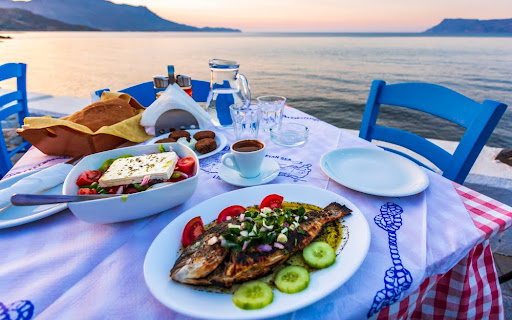
Greek Food Unplugged by Eirini Katidou
Healthy Eating, the Greek Way
For decades, the world has been obsessed with the idea of “healthy eating.”Endless rules. Conflicting information. Social media trends that appear and disappear overnight. The pressure is so high that many people end up in one of two extremes:
Those who follow a “perfect diet” with military discipline — until eating becomes a stressful project rather than a pleasure.
And the rest of us, who quietly admit (or don’t admit) that keeping up with all this advice feels overwhelming, confusing, and often impossible.
But somewhere between obsession and avoidance lies something far more sustainable — the Greek way of eating. A way that is simple, enjoyable, balanced, and deeply connected to everyday life.
Healthy eating, as Eirini reminds us, does not mean fear or restriction.
- It doesn’t mean eliminating the foods you love.
- It doesn’t mean counting every gram or chasing trends.
Healthy eating simply means this:
- Small, gentle changes to the meals you already enjoy.
- A little less of certain foods, a little more of others — done consistently and without anxiety.
When approached with joy instead of guilt, healthy eating becomes a daily pleasure. Not a punishment.
⸻
Why the Mediterranean Diet Became a Global Icon
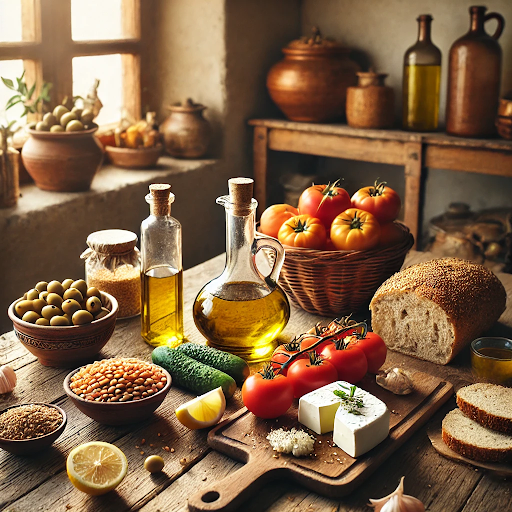
Long before “superfoods” became fashionable, and long before the world discovered wellness culture, the people of Greece were already living one of the healthiest lifestyles on Earth — without trying.
Fresh vegetables, fruits, legumes, whole grains, olive oil, fish, small amounts of meat, shared meals, movement, sunshine…
- It wasn’t a “diet.”
- It was simply life.
But in 1960 and 1961, something remarkable happened: that life became the subject of one of the most important scientific studies of the 20th century.
⸻
The Seven Countries Study: When Crete and Corfu Became a Global Laboratory
More than 1,000 people in Crete and Corfu participated in a research project that would later introduce the legendary term “Mediterranean Diet.”
The Seven Countries Study (SCS) was the first long-term, multicultural population study to examine how diet and lifestyle affect heart disease and overall health.
For the first time, researchers looked at health not just through medical charts, but through culture, geography, daily habits, and the rhythm of life.
The findings were extraordinary:
The Cretan population — living simply, eating locally, and moving naturally through their day — had some of the lowest rates of cardiovascular disease in the world.
This wasn’t magic.
It was the Mediterranean way of life.
The study reshaped how the global scientific community viewed nutrition. It became the foundation for modern preventive medicine and transformed the Mediterranean Diet into an international gold standard for longevity.
⸻
What a Healthy Mediterranean Pattern Really Looks Like
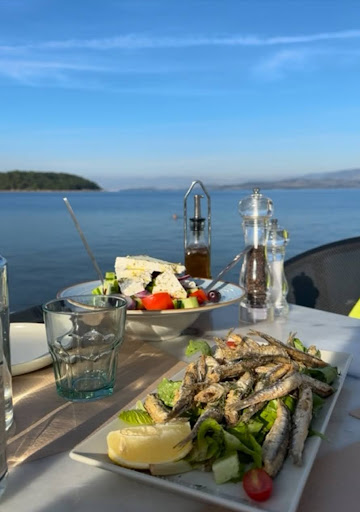
- You don’t need perfection.
- You don’t need expensive ingredients.
- You don’t need to reinvent your meals.
Healthy, balanced eating follows a simple blueprint — and Eirini offers a clear overview of what a protective diet typically includes:
- Total fats: 30–35% of daily calories
- Saturated fats: less than 7%
- Polyunsaturated fats: up to 10%
- Monounsaturated fats: up to 20%
- Carbohydrates: 50–60%
- Fiber: 20–30g per day
- Protein: around 15%
- Cholesterol: less than 200mg/day
- Calories: a balance between intake and activity
These guidelines reflect the same pattern that kept generations of Greeks healthy — long before nutrition became a science.
⸻
A More Gentle Kind of Wellness
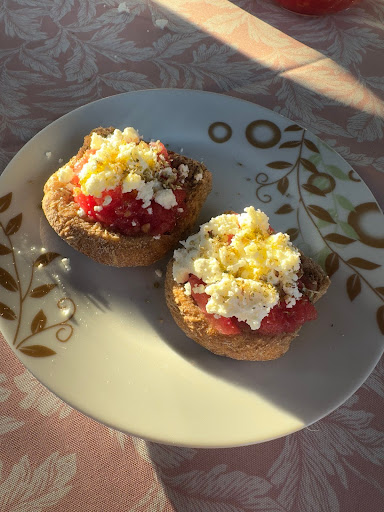
The true lesson of the Mediterranean Diet is not in the numbers above.
It’s in the philosophy behind them.
- Greeks eat with joy.
- They eat slowly.
- They share food.
- They use what is seasonal, simple, and fresh.
- They trust olive oil, vegetables, legumes, and fish as daily staples — not exceptions.
Healthy eating is not a performance.
It’s a relationship.
And like all good relationships, it thrives on balance, moderation, warmth, and pleasure.
This is why the Mediterranean Diet continues to inspire the world:
Because it reminds us that health is not complicated — we made it complicated.
⸻
Greek Food Unplugged: A New Chapter
This story is the beginning of a new chapter at Greece Unplugged — a space where we explore Greek food through science, culture, memory, and everyday life.
Together with Eirini, we will peel back the layers of what it truly means to “eat like a Greek”:
Not perfectly.
Not anxiously.
But honestly, joyfully, and with respect for the body and the land.
Because healthy eating is not an achievement.
It is a lifestyle — one that Greece has practiced naturally for centuries.
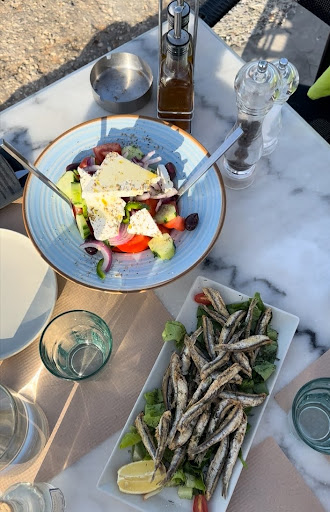
Introducing Eirini Katidou
Eirini Katidou is a registered dietitian with a passion for nutrition that goes far beyond trends or beauty standards. I’m lucky to call her a friend — someone whose approach to health is as kind, thoughtful, and grounded as she is.
Her work focuses not on weight loss for appearance, but on nourishing the body to feel strong, healthy, and well. She regularly attends seminars on how nutrition can support the prevention and management of chronic illnesses — from heart disease to autoimmune conditions — and applies that knowledge in a deeply practical way.
What sets Eirini apart is how personalized her approach is. Her dietary programs are always tailored to each person’s individual needs, lifestyle, and goals, with one clear foundation: the Mediterranean diet. She uses this traditional way of eating — simple, seasonal, and balanced — to help people reconnect with food in a way that supports both health and enjoyment.
Eirini believes that healthy eating should never feel like punishment. Her philosophy is simple: your relationship with food should be respectful, joyful, and rooted in real life — not perfection.