

If you are traveling in Northern Greece, there is one stop that completely changes how you understand Greek history:
📍 Vergina
Located about one hour from Thessaloniki, this is not just an archaeological site.
It is where the ancient capital of Macedonia once stood — Aigai — and where one of the most important discoveries in Greek history was made.
And honestly, even if you are not usually a “museum person,” this place feels different
The Drive Through the Macedonian Plain
The route to Vergina is part of the experience.
You drive through the Macedonian plain (ο μακεδονικός κάμπος), a huge fertile agricultural area that feeds much of Northern Greece.
It’s a landscape many people do not expect in Greece.
Instead of islands or dramatic mountains, everything opens up. Flat land, endless fields, orchards, villages, and farmland stretching for kilometers.
This region, especially around Imathia, is known for its fruit production.
If you visit in spring, the scenery changes completely:
- In March, the peach trees bloom
- In May, the cherry trees take over
It’s one of those drives where you keep looking outside the window the entire time.

A Discovery That Changed Greek Archaeology
What makes Vergina so important is not only what was found — but how it was found.
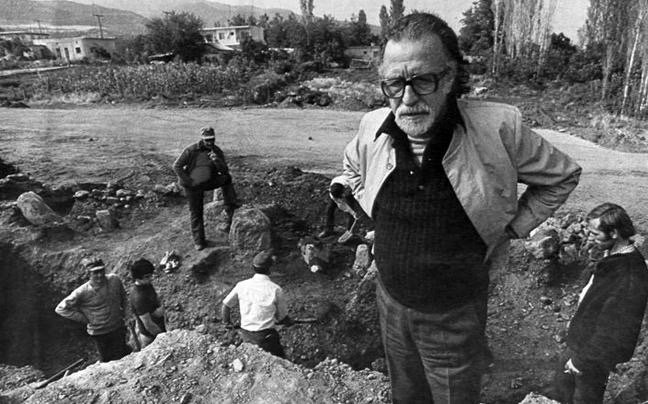
In 1977, Greek archaeologist Manolis Andronikos uncovered the royal tombs of ancient Aigai.
Unlike many ancient sites around the Mediterranean, these tombs had not been looted.
They were discovered sealed underground, protected for centuries.
When archaeologists entered, they found:
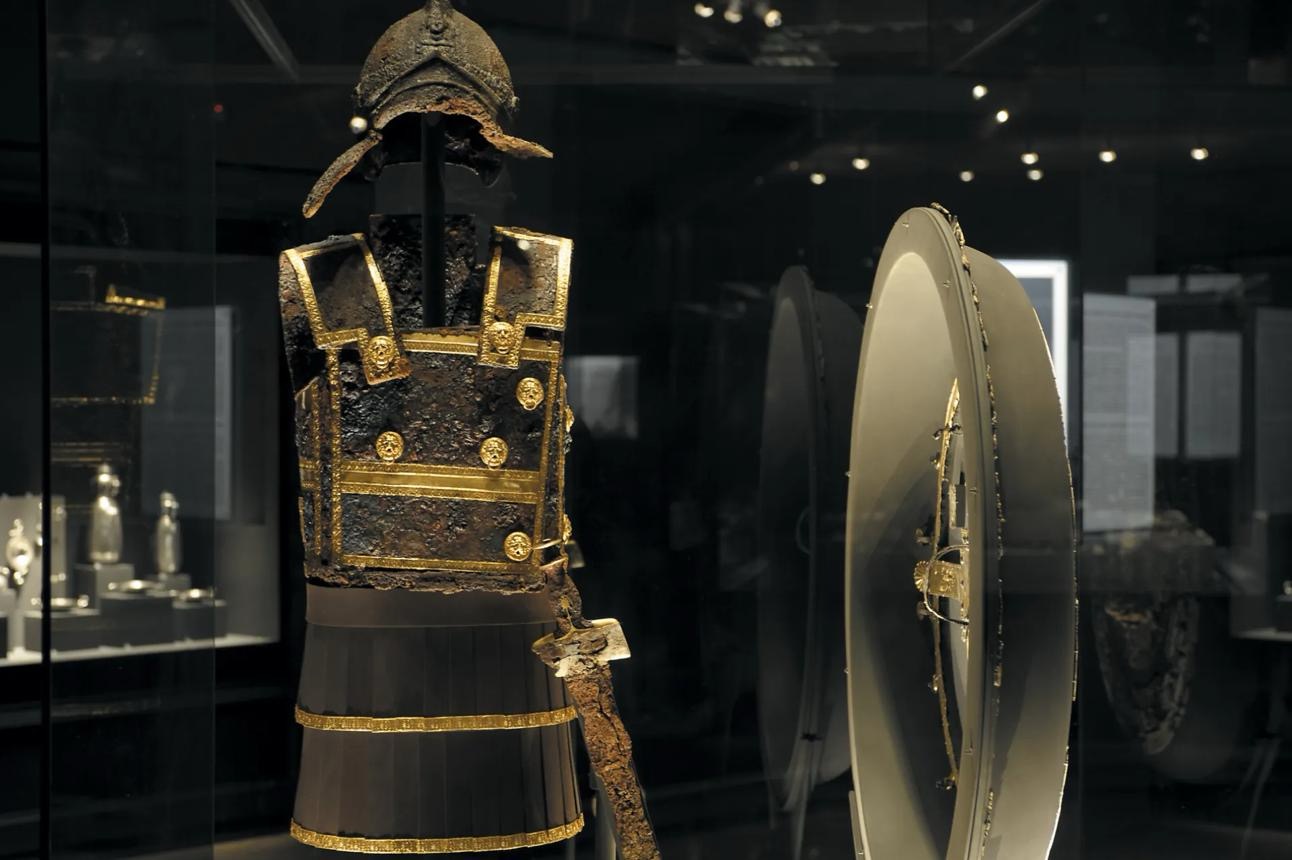
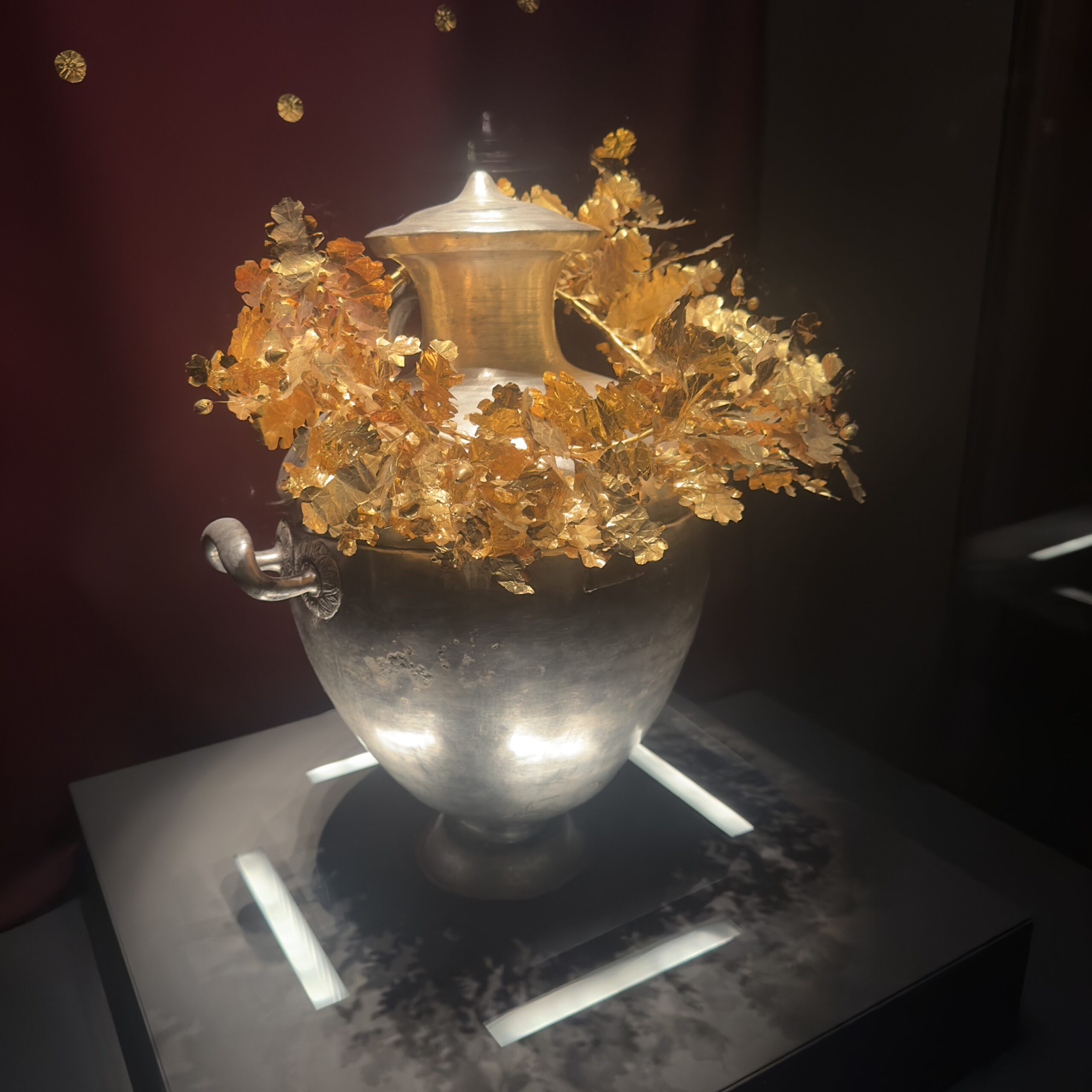
- gold artifacts
- weapons
- burial offerings
- wall paintings
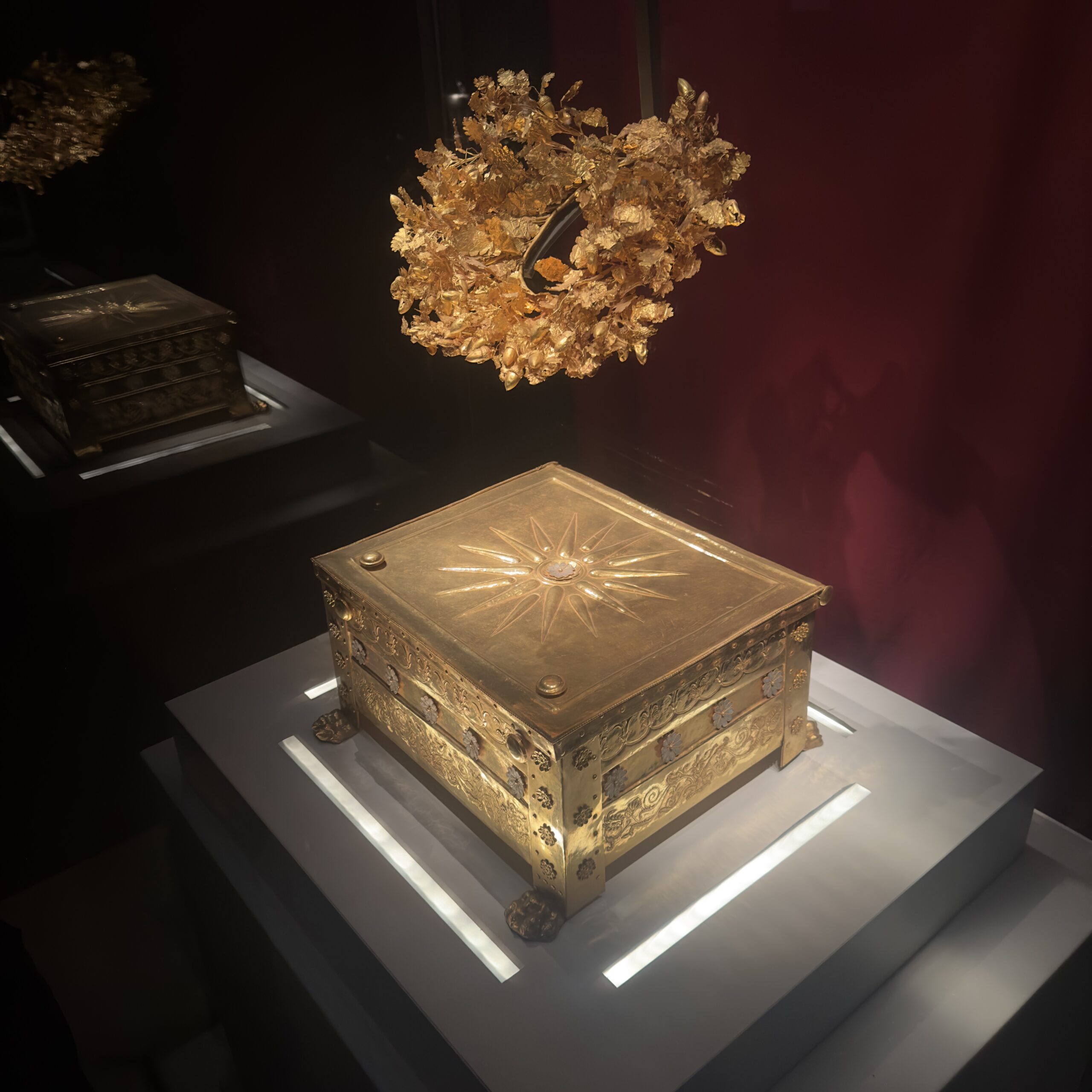
- and the famous gold larnax with the Vergina Sun
Among the tombs was one believed to belong to Philip II of Macedon, father of Alexander the Great.
It became one of the most important archaeological discoveries of the 20th century.
The Museum: Built Around the Tombs
One of the most unique things about Vergina is the museum itself.
This is not a typical museum where artifacts are simply displayed behind glass.
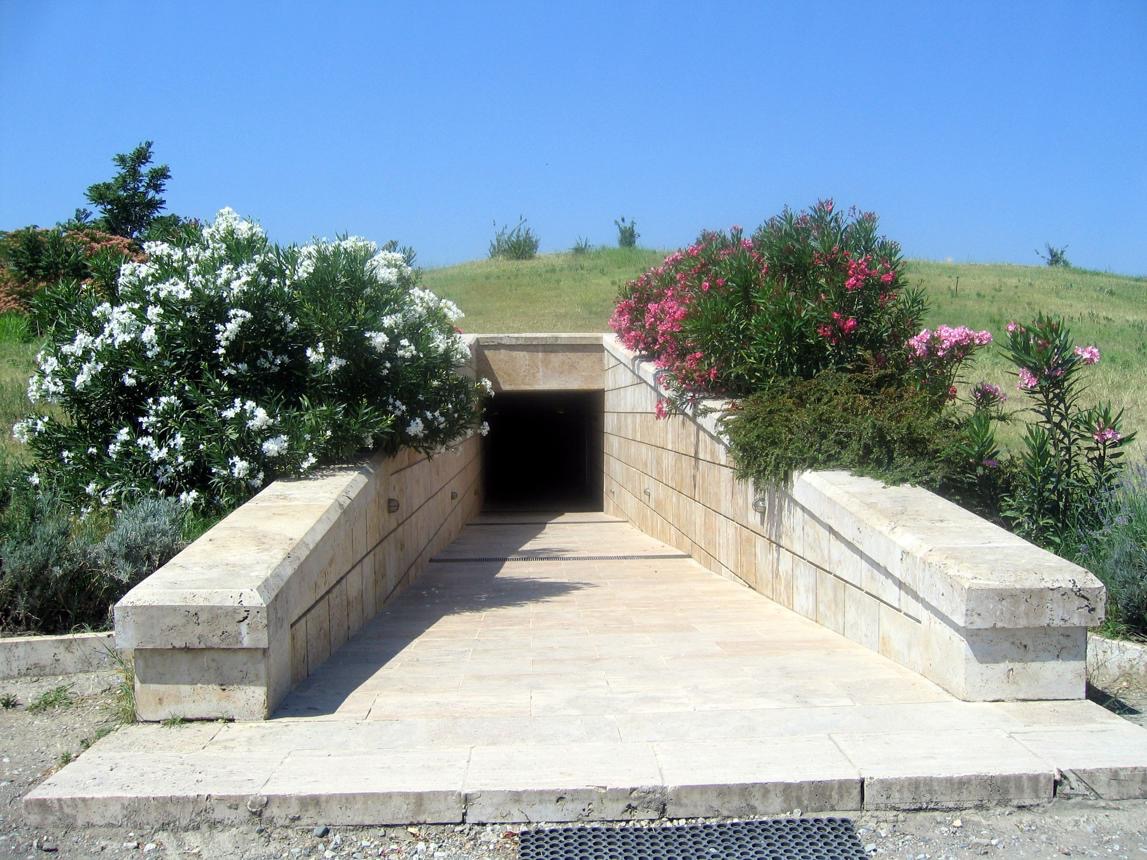
The Museum of the Royal Tombs of Aigai is built directly around and above the tombs.
From the outside, it almost looks like part of the earth — low, covered, quiet.
Almost like another burial mound.
And once you enter, everything changes.
Inside, everything is:
- dark
- quiet
- atmospheric
You walk through the space almost as if you are entering the tombs yourself.
The lighting is soft and focused.
Gold appears slowly from the darkness.
You naturally lower your voice without even realizing it.
And then suddenly, in front of you, you see them:
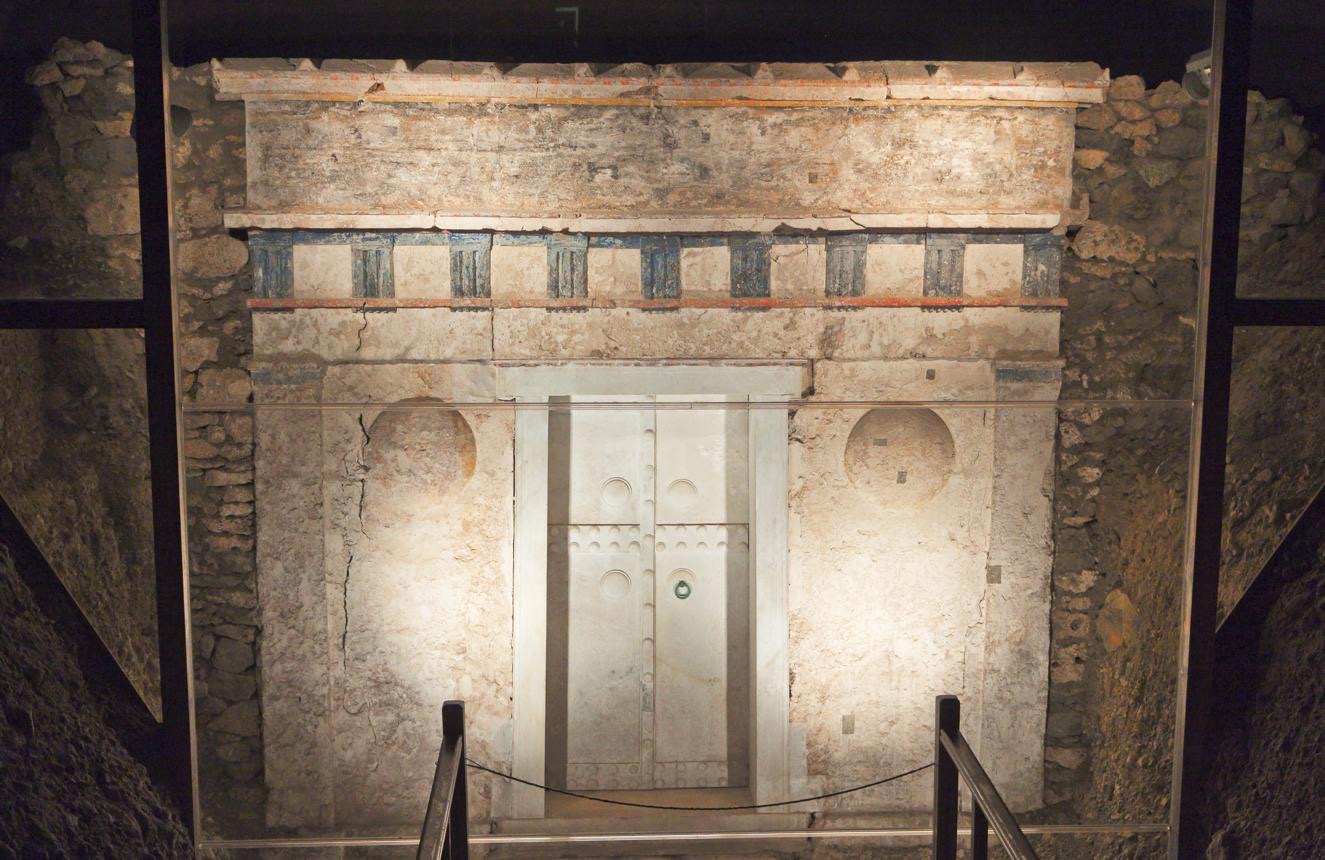
the actual tomb facades
the original burial chambers
As you move through the museum, every object tells part of the story of ancient Ancient Macedonia.
You will see:
- The Royal Tombs, including the one attributed to Philip II
- The famous gold larnax with the Vergina Sun symbol
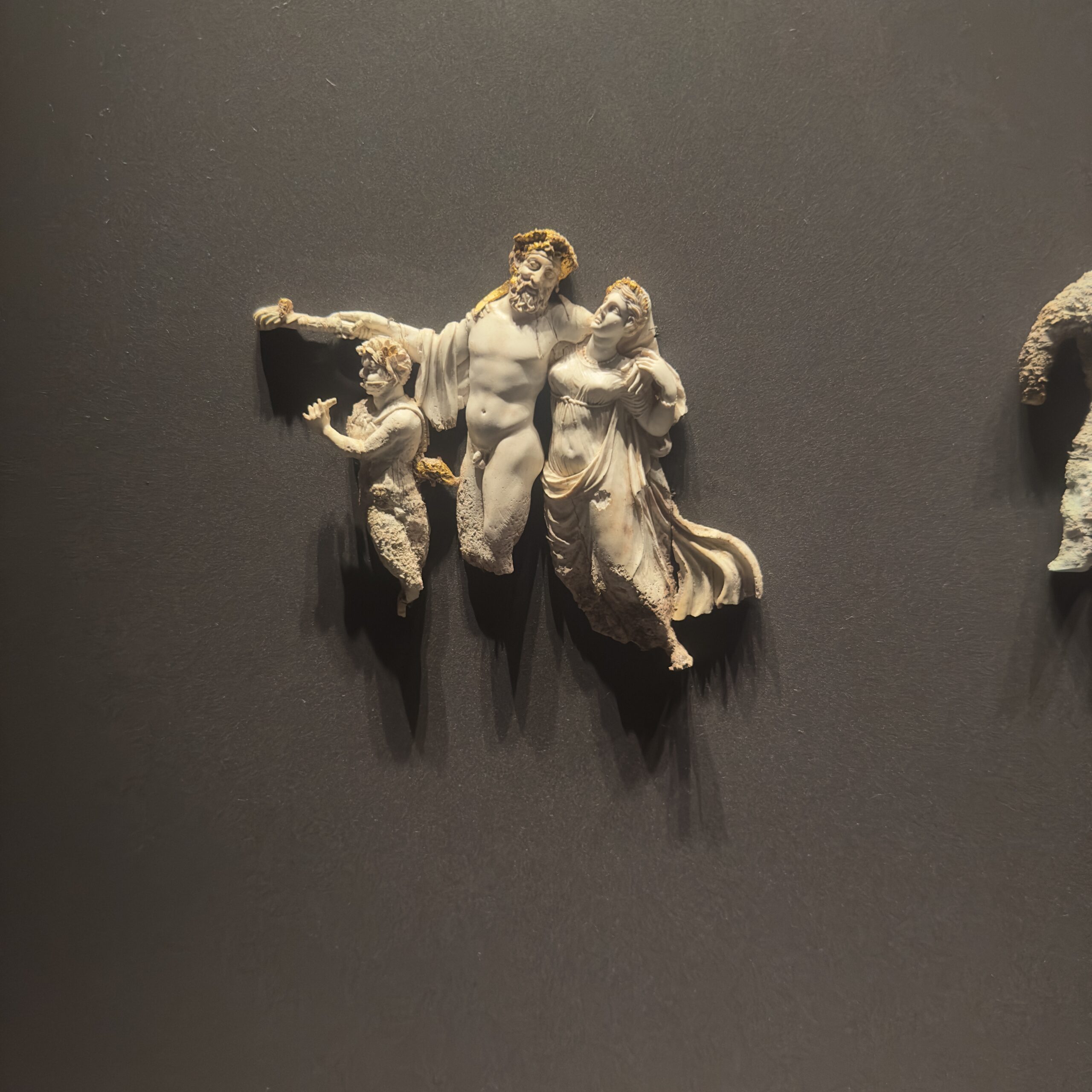
- Elaborate burial offerings and ceremonial objects
- Weapons and armor
- Frescoes that survived underground for centuries
And what makes it powerful is that nothing feels exaggerated or overproduced.
The experience is focused. Quiet. Emotional.
Why Vergina Matters Beyond Tourism
Vergina is not just important archaeologically.
It also has enormous historical and cultural significance.
The discoveries from Aigai clearly demonstrate the strong connection between ancient Macedonia and the rest of the Greek world.
From language and religion to art, architecture, burial traditions, and political structure — everything aligns with what we know from the ancient Greek world.
This is why the site matters so much in understanding:
the rise of Macedonian power
the origins of the Macedonian kingdom
and the world in which Alexander the Great grew up
Standing there, it becomes very easy to understand that ancient Macedonia was not isolated from Greek civilization — it was one of the forces that shaped its future.
What to Expect When You Visit
This is not a “quick photo stop.”
Even though the museum itself is relatively compact, the experience feels intense in the best possible way.
A few suggestions:
Give yourself at least 1.5–2 hours
Walk slowly through the museum
Read some of the descriptions
Allow yourself time to absorb the atmosphere
This is one of those places that is meant to be felt, not rushed.
Final Thoughts
I think what impressed me the most about Vergina was not only the gold or the history.
It was the feeling.
The silence.
The darkness.
The fact that you are standing in front of something real and untouched for centuries.
There are many beautiful archaeological sites in Greece.
But Vergina feels personal.
And if you are already visiting Northern Greece — especially around Thessaloniki, Naousa, or the wine regions of Macedonia — I truly think this is one of the most meaningful stops you can make.